

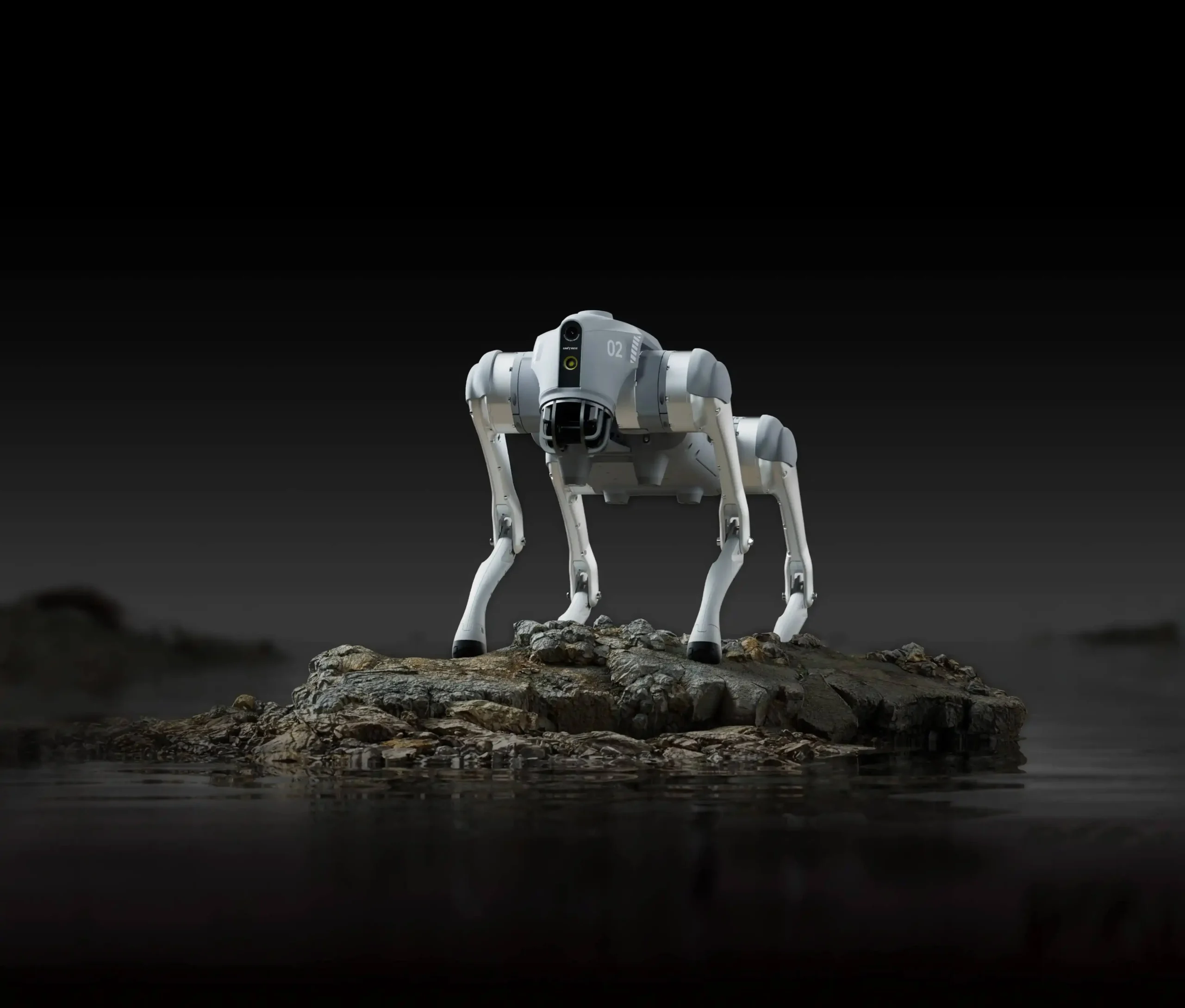
The Unitree Go2 technical specifications set new standards for consumer and professional quadruped robotics, integrating AI based on large language models for the first time. Developed by Unitree Robotics, this robot stands out for its proprietary laser vision system and high-resistance mechanical structure.
Key Takeaways
- 4D ultra-wide-angle LiDAR sensor with 360°x90° coverage.
- Maximum speed ranging from 2.5 m/s to 5 m/s depending on the model.
- Native GPT integration for voice commands and advanced interaction.
Unitree Go2 technical specifications for Air, Pro, and Edu models
The robot is available in three main variants. The Air version is the entry-level model with a speed of 2.5 m/s, while the Pro version increases performance by including an advanced AI processing module. The Edu variant, intended for research, reaches 5 m/s and supports a payload of up to 12 kg. All versions share the 4D L1 LiDAR sensor, enabling obstacle detection from a minimum distance of just 0.05 meters.
Advanced features and GPT artificial intelligence
Unlike its predecessors, the Go2 implements the ISS 2.0 system (Intelligent Side-follow System), allowing the robot to walk alongside the operator while autonomously avoiding obstacles. In the Pro and Edu models, GPT integration allows users to interact via natural language, enabling the robot to interpret complex commands and provide vocal feedback through integrated 40W speakers.
Unitree Go2 technical specifications on battery and range
Energy efficiency is ensured by a 28.8V power system. The technical specifications Unitree Go2 indicate a standard 8,000 mAh battery for the base models, extendable to 15,000 mAh (Ultra-long battery life version) for working sessions that can reach 4 hours. The optimized thermal management system ensures consistent performance even during complex movements such as jumps, somersaults, or climbing steps and slopes up to 40 degrees.